

America’s Wildfire Firefighters Are Disappearing — And Congress Can’t Stop It
The Trump administration is shrinking the federal agencies that fight wildfires — not by cutting their funding (Congress refused to allow that) — but by driving out the people who do the work.
The Money Is There. The People Aren’t.
Congress controls the federal budget. The Trump administration wanted to cut the U.S. Forest Service (the main federal agency that manages forests and fights wildfires) by $1.4 billion and reduce its workforce by more than half — from 30,000 employees to 12,000.
A bipartisan group in Congress rejected that plan completely. They passed a spending bill that gives the Forest Service its full funding — $3.7 billion specifically earmarked to keep staffing at 2024 levels
So the Forest Service has the money. What it doesn’t have is the people.
Here’s what happened instead:
| Metric | What Congress funded | What the executive wants |
| Total staff | 30,000 | 12,000 |
| Research stations | 77 | 22 (55 to close) |
| Non-fire budget | $3.7 billion | $0 (cut entirely) |
| Already lost (May 2026) | — | 5,900 workers (16%) |
The agency lost nearly 6,000 experienced employees through early retirements, buyout offers, and what happens when the federal government announces it’s moving your headquarters from Washington, D.C. to Salt Lake City, Utah — immediately.
That relocation was announced on March 31, 2026. The administration also announced plans to shut down 9 regional offices and replace them with 15 state directors. Senior agency officials and fire management experts have described the disruption as severe.
Why This Matters Right Now
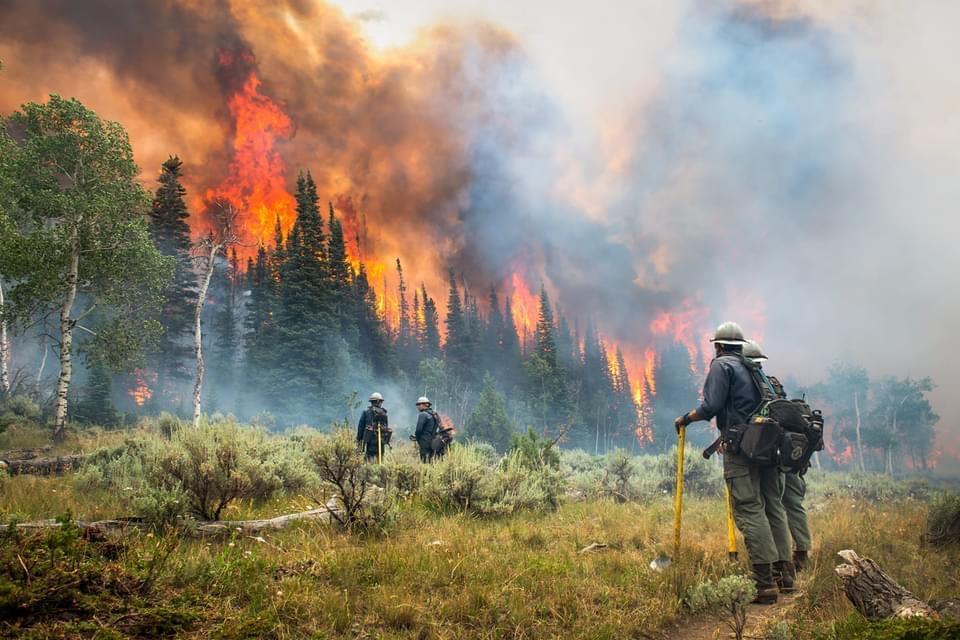
The 2026 wildfire season is already burning at more than twice the normal rate.
As of April 10, 2026: 1.7 million acres burned — 231% of the 10-year average.
The January 2025 Los Angeles wildfires caused $40 billion in insured losses — the most expensive wildfire event ever recorded anywhere in the world.
A July 1, 2026 deadline requires western states to enforce new building codes in high-risk fire zones. The federal staff who were supposed to help states implement those standards have been leaving in large numbers.
The Algorithm That Canceled Fire Prevention Grants
The U.S. Department of Agriculture manages hundreds of community grants that help rural areas prepare for wildfires, protect watersheds, and build local resilience. These grants fund the kind of ground-level work — tree thinning, prescribed burns, community planning — that prevents fires from becoming catastrophes.
49 out of 50 major grants under one $127 million program have been canceled. Here is how it worked, according to court documents filed May 27, 2026 in a federal lawsuit:
“The process for finding grants the administration deemed worthy of termination was essentially a simple search through grant documents for words it associated with diversity, equity, inclusion, or climate change.”
— FarmSTAND / Earthjustice legal filing, USDN v. USDA, May 27, 2026
Grant files were scanned by an automated system. If they contained words like “diversity,” “equity,” “inclusion,” or “climate change,” they were flagged and canceled. No one reviewed whether the grant actually served those purposes or not. The termination letters cited “waste, fraud, and abuse” — but they were identical form letters, not individualized assessments.
On top of that, a new rule introduced in February 2026 requires every organization receiving federal money to certify that it doesn’t use diversity-focused hiring practices. Organizations that don’t certify risk being sued under federal law. Many rural fire-prevention programs have quietly withdrawn from federal funding rather than accept that legal risk.
Twenty states have filed a lawsuit challenging these grant conditions. The case is ongoing.
The Plan to Replace Forest Management With Logging — And Why It’s Stuck in Court
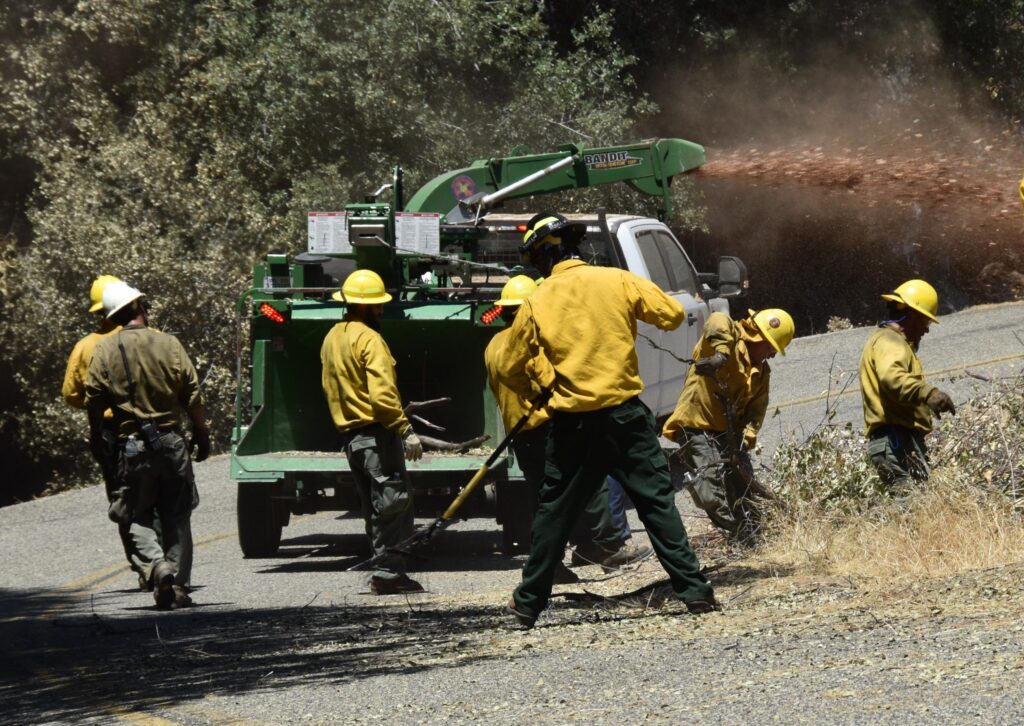
The administration’s alternative to scientific forest management was commercial logging. Two executive orders directed land agencies to focus on timber harvesting rather than ecological fuel management. The idea: let commercial loggers thin out the forests that fuel wildfires.
There was a legal shortcut that made this possible at scale: a 34-year-old rule called “Categorical Exclusion 6” (CE-6) that let the Forest Service skip required environmental reviews for commercial logging projects.
On January 13, 2026, a federal court in Oregon struck down that rule. The judge called the agency’s use of it “arbitrary and capricious.” The ruling applies nationwide.
The FEMA Story: Fired for Defending the Agency, Now Nominated to Run It
On May 7, 2025, the acting head of FEMA — Cameron Hamilton — was asked during a congressional hearing whether he supported the administration’s proposal to abolish FEMA entirely. He said:
“I do not believe it is in the best interest of the American people to eliminate the Federal Emergency Management Agency.”
— Cameron Hamilton, congressional testimony, May 7, 2025
The next morning, he was subjected to a polygraph examination by Department of Homeland Security officials (reportedly over concerns about leaked meeting details). He passed. He was fired anyway.
On May 11, 2026 — a year later — President Trump formally nominated Cameron Hamilton to permanently lead FEMA.
During his time as acting administrator in 2025, Hamilton:
- Stopped door-to-door outreach to disaster survivors
- Canceled a multi-billion dollar community resilience grant program
- Gave the Department of Government Efficiency (DOGE) access to private survivor data networks
His Senate confirmation hearing will be the next major public moment in this story.
What the Administration Says
The administration’s arguments, presented fairly:
- The anti-DEI grant conditions are legally required — prior programs used race-conscious criteria that violated non-discrimination laws, and correcting that is a legal obligation, not a policy choice.
- Moving the Forest Service headquarters to Salt Lake City puts leadership closer to the lands they manage — a practical efficiency, not a disruption.
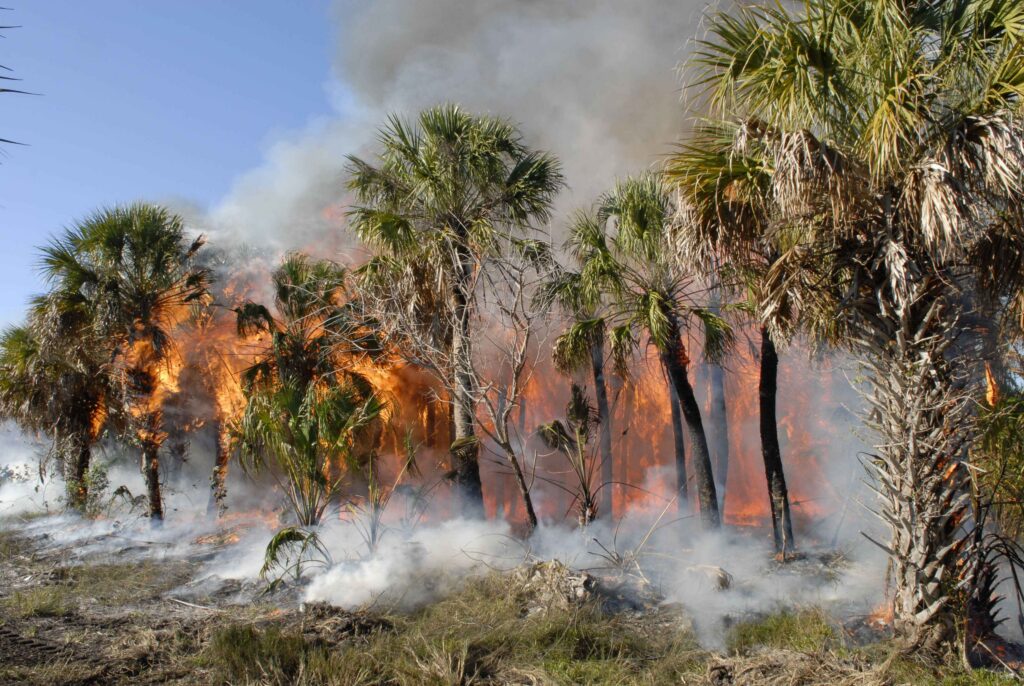
- Prescribed burns have continued throughout 2026 at military installations and national recreation areas — there is no “burn ban.”
- Hamilton’s re-nomination reflects his institutional courage in defending federal disaster response before Congress.
The core problem with these arguments is not that they’re entirely wrong — prescribed burns are indeed continuing in some places, and Hamilton did publicly defend FEMA. The problem is that scattered burns at military bases don’t replace a national fuel management program, and Hamilton’s actions during his 2025 tenure tell a different story than his testimony did.
What to Watch Next
On July 1, 2026, states must begin enforcing new building codes in Wildland-Urban Interface (WUI) zones — the high-risk areas where homes meet wildland. Federal staff who were supposed to help states implement these standards have been leaving in large numbers.
Cameron Hamilton’s Senate confirmation hearing will happen before this date. Senators from fire-affected western states will have the opportunity to question him on the record.
The 2026 fire season is accelerating. As of April 10, it was already burning at 231% of normal. Peak season runs through summer.
Sources
This article is based on the following primary sources:
- Columbia Climate School — “Destroying the U.S. Forest Service Imperils America’s Forests,” May 4, 2026
- U.S. Senate Committee on Appropriations — FY2026 Interior Conference Bill Summary, May 2026
- Associated Press / The Commercial Dispatch — Hamilton nomination reporting, May 13, 2026
- DLA Piper — “2026 Wildfire Trends,” May 26, 2026
- Earthjustice — “Recently Shuttered USDA Program Grantees Join Suit,” May 27, 2026
- McGuireWoods LLP — “Spring 2026 Newsletter: Wildfire Regulation and Litigation,” April 16, 2026
- Office of Personnel Management — Federal Register, April 14, 2026 (EO 14308)
Prepared May 27, 2026 | Based on public records, federal litigation filings, and congressional appropriations documents.